How to Build a Legacy Your Kids Will Remember
When people hear the word "legacy," they often picture something big: a family business, a house, a trust fund or a name on a building. Those things can matter. But ask adults what they remember most about the parents and grandparents who raised them, and the answers are usually much smaller.
"He always whistled when he cooked breakfast on Saturdays." "She called every single one of us on our birthdays." "He taught me how to tie a tie for my first interview." "They told us the same story about coming to this country every Thanksgiving, and we never got tired of it."
That's legacy. It's the values, stories, habits and memories that live on in your children long after you're gone. At SONSON®, our tagline is "one son to another," and our first piece, a matching bow tie set for a father and son, was about exactly that: something meaningful passed from one generation to the next. Here's how to build a legacy your kids will remember.
Key takeaways
• The legacy kids remember most is made of values, stories, habits and time, not only money or possessions.
• Research suggests children who know their family's story tend to show more resilience.
• Start now with small, repeatable acts: tell stories, write letters, keep traditions and get your practical affairs in order.
Why your family's story matters
In the 1990s, Emory University psychologists Marshall Duke and Robyn Fivush developed a simple 20-question "Do You Know?" scale. It asked children questions like "Do you know where your grandparents grew up?" and "Do you know the story of your birth?" Their research found that children who knew more about their family history tended to show stronger well-being and resilience. Writer Bruce Feiler brought this research to a wide audience in a 2013 New York Times essay, "The Stories That Bind Us."
The researchers suggested that the most helpful family story is one that includes both ups and downs: "We've had hard times, and we stuck together and came through them." That kind of story helps kids feel part of something bigger, and gives them confidence that they can get through hard times too.

Legacy lives at the kitchen table, in stories and habits passed down. Photo: Jelly Marketing via Unsplash, Unsplash License.
8 ways to build a legacy your kids will remember
1. Tell your story, including the hard parts
Share where you grew up, what your first job was, how you met their mother or partner, the mistakes you made and what you learned. Tell them about their grandparents and great-grandparents. Kids don't need a polished highlight reel. They need the real story.
2. Record the elders while you can
Use your phone to record a grandparent telling a story, cooking a family recipe or describing the old neighborhood. Label the files and save them somewhere safe. Those recordings can become priceless.
3. Name your family values out loud
What does your family stand for? Faith, education, hard work, generosity, honesty, humor? Talk about it. Some families write a simple family motto or a short list of values and revisit it at the start of each year. When kids can name the values, they can carry them.
4. Create traditions and keep them
Traditions are legacy in action. They don't have to be big: pancakes on the first day of school, a yearly family photo in your Sunday best, a holiday dish that only Grandpa makes, an annual trip to the same beach. Repetition is what makes them unforgettable.
5. Teach practical skills by hand
Some of the most lasting legacies are skills: how to change a tire, balance a budget, grill a perfect steak, sew on a button, tie a bow tie or speak up for yourself. Every time your child uses that skill, they'll think of you.

What children remember most is how you made them feel. Photo: Alvaro Reyes via Unsplash, Unsplash License.
6. Write letters for the future
Write a letter to each child for a milestone they haven't reached yet: graduation, their wedding day, the birth of their first child. Tell them what you love about them, what you hope for them and what you've learned. Seal it and store it with your important papers.
7. Pass down meaningful objects, with their stories
A watch, a Bible, a bow tie, a set of cufflinks, a quilt. Objects can carry a family's history, but only if the story travels with them. Write a short note about who owned it, when they wore or used it and why it matters, and keep it with the item.
8. Get your practical affairs in order
Legacy also includes making things easier for the people you love. Write a will, name guardians for young children, check the beneficiaries on your accounts and life insurance, and make sure someone knows where your important documents are. [Shima: optional, suggest readers talk with an estate-planning attorney or financial advisor for their situation.] Taking care of these details is an act of love.
The legacy of everyday presence
The most powerful legacy isn't something you build once. It's how you show up every day. Children remember whether you were there, whether you listened and how you made them feel. The Harvard Study of Adult Development, which has followed participants for more than 80 years, has found that warm, close relationships are among the strongest predictors of a happy, healthy life. Building those relationships with your kids now is the foundation of everything else.
Here are a few questions worth asking yourself:
- What do I want my kids to say about me when they're grown?
- What stories am I telling them, and what stories am I leaving out?
- Which family traditions do I want to keep, and which new ones do I want to start?
- What skills do I want to pass down?

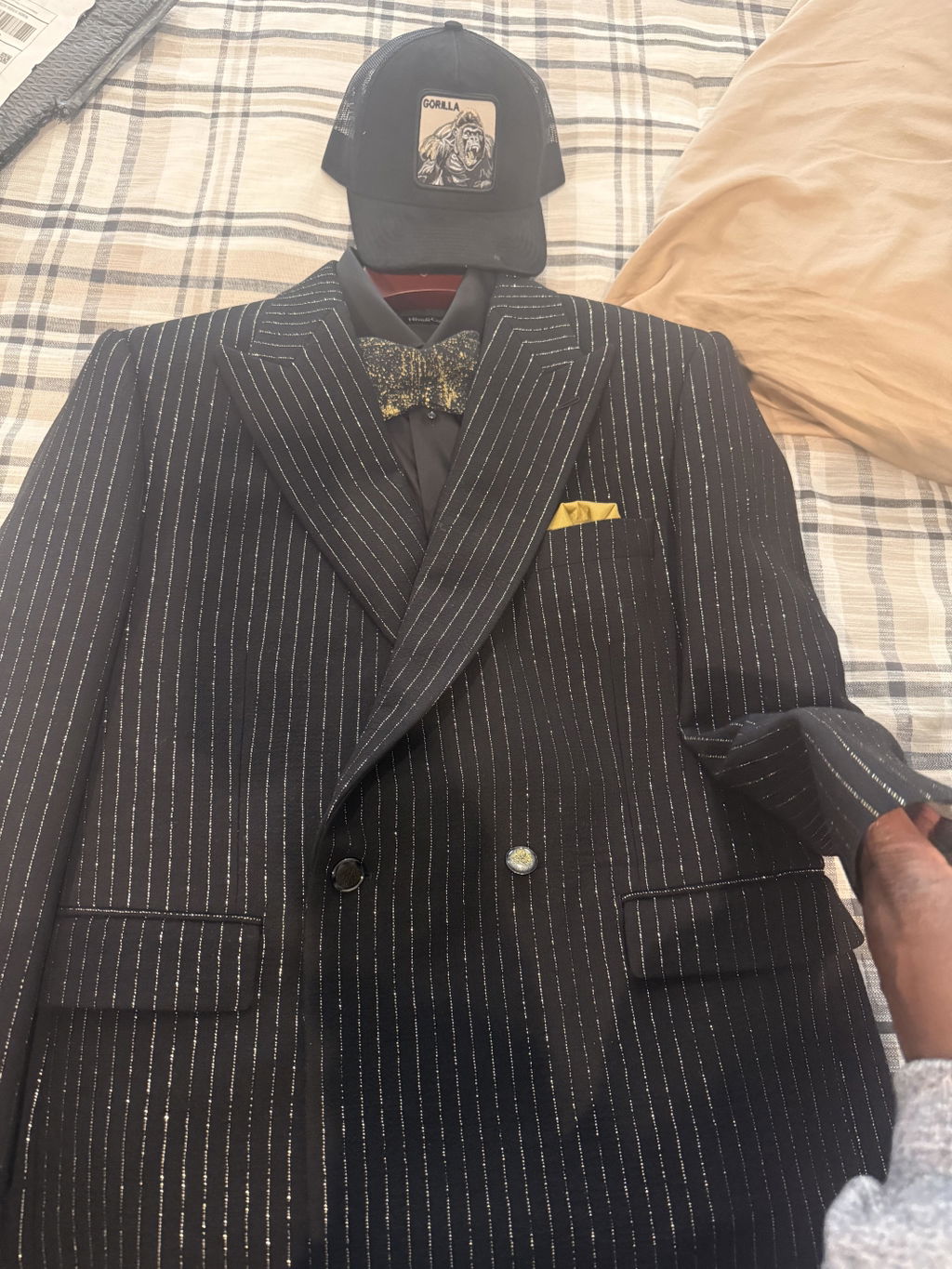
Clothing and heirlooms can carry a family's story forward. Photo: SONSON®.
It's never too late
If you're reading this and thinking you've waited too long, you haven't. Grown children still want their parents' stories. Grandchildren still want to learn from their grandparents. A single recorded conversation, a handwritten letter or a new tradition started this year can become part of your legacy.
Your next step
This week, tell your children one story about your childhood or about their grandparents that they've never heard. Then pick one more step from the list above, like writing a letter or starting a tradition, and put it on your calendar.
If you want to begin a wearable tradition, like matching bow ties for family photos or a first bow tie passed from father to son, explore the SONSON® bow tie collection and our African print bow ties.
One son to another.
References and further reading
- Marshall P. Duke, Amber Lazarus and Robyn Fivush, Knowledge of family history as a clinically useful index of psychological well-being and prognosis: A brief report, Psychotherapy: Theory, Research, Practice, Training (2008)
- Bruce Feiler, The Stories That Bind Us, The New York Times (2013)
- Robert Waldinger, What makes a good life? Lessons from the longest study on happiness, TED (2015)
- Harvard Study of Adult Development, About the study
- SONSON®, About Us